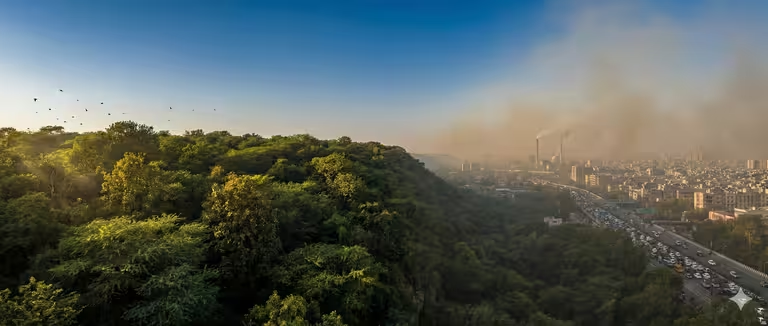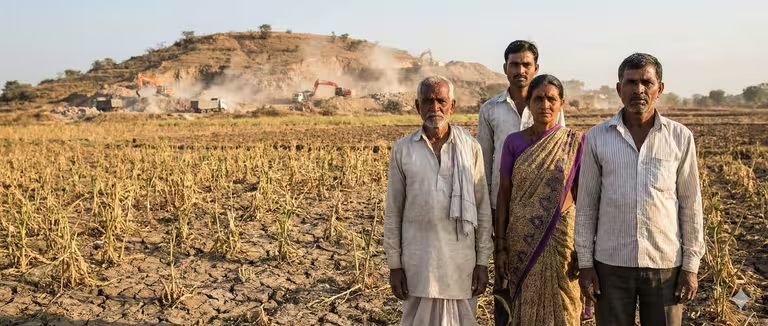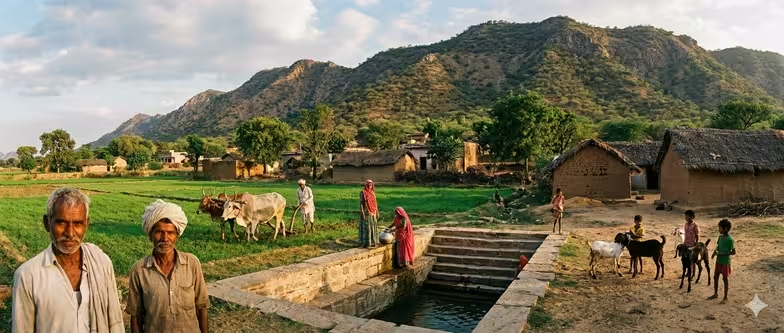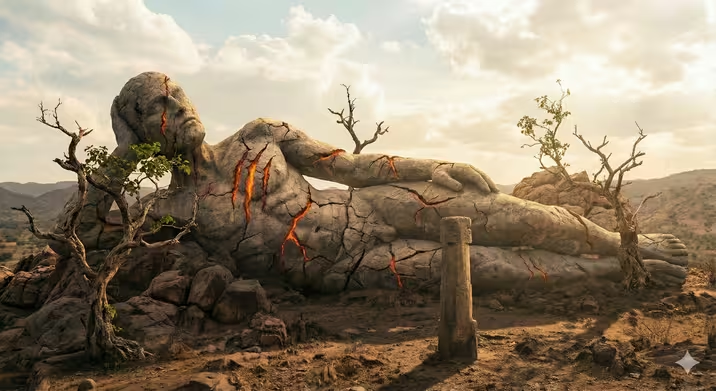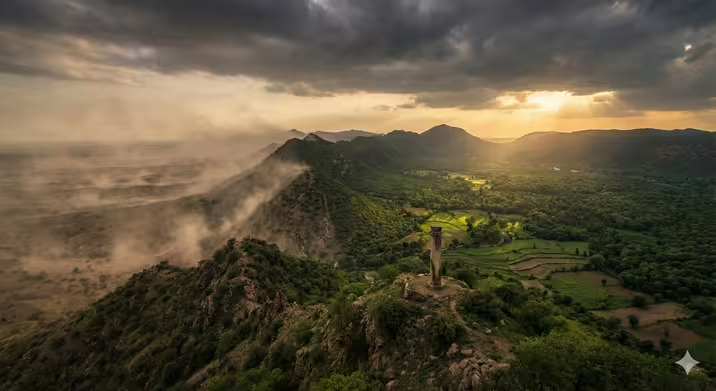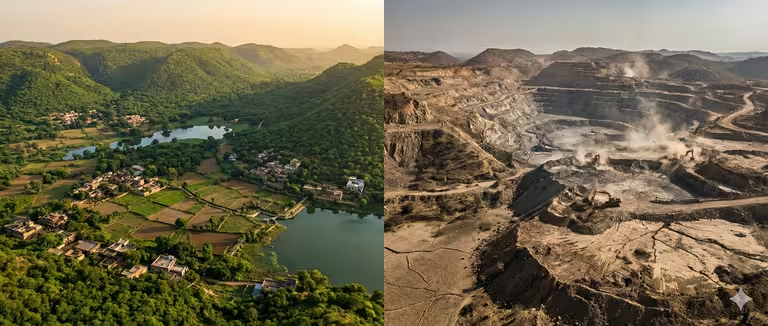
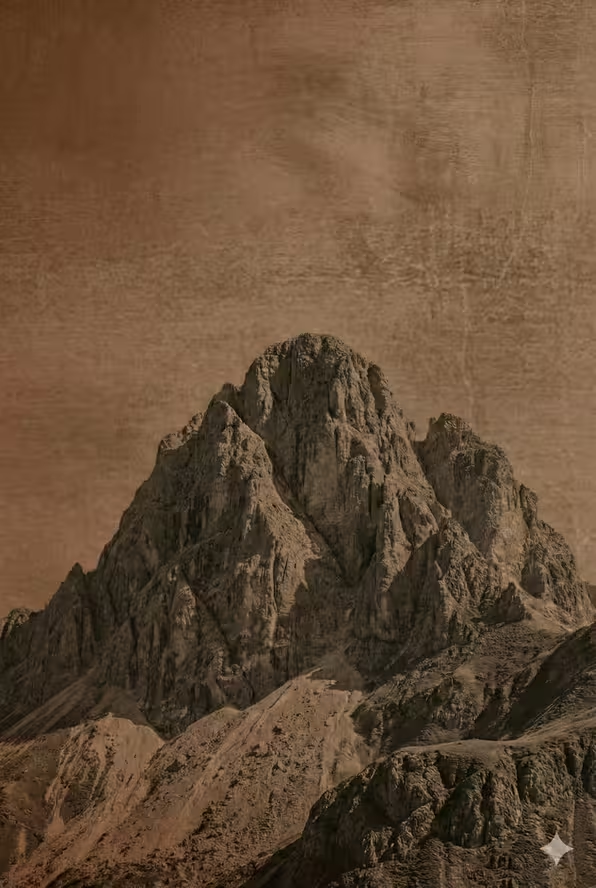
Aravali range - The soul of North India’s ecology and the backbone of its water security - is being slowly suffocated to death.

A destructive mindset of tearing down hills, flattening forests, and monetizing nature in the name of “development” began decades ago. Unfortunately, that same mindset continues even today, despite all scientific warnings and judicial acknowledgments.

Aravali is not just a stretch of land.

It is one of the oldest living mountain systems on Earth, older than the Himalayas, silently protecting millions of lives for billions of years. It holds water, breathes life into forests, shelters wildlife, and stands as a natural wall against desertification.

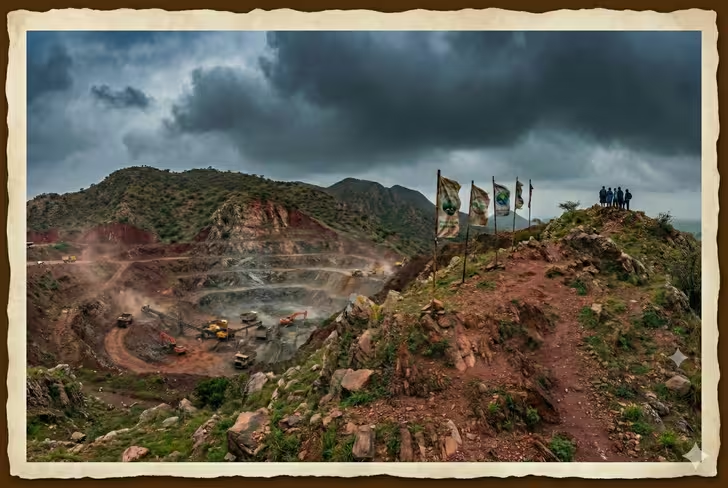
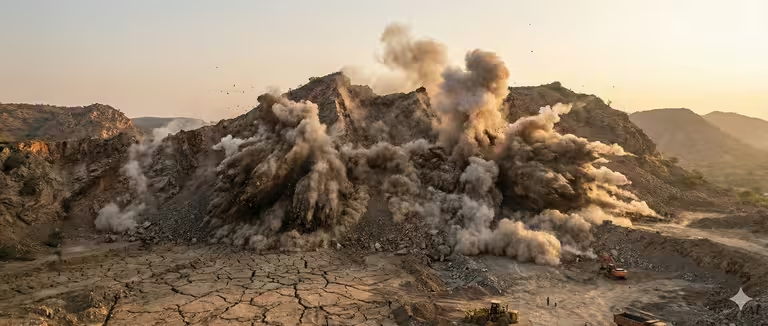
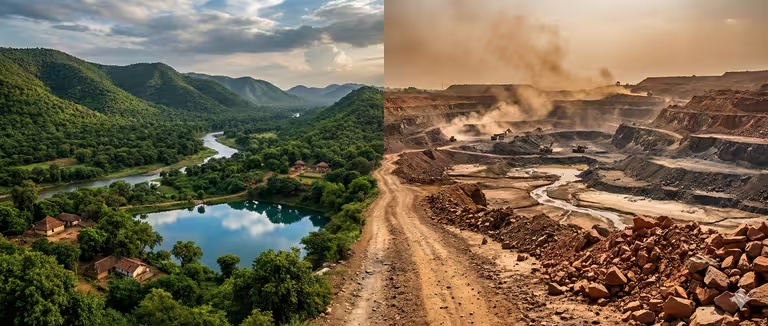
Yet today, these ancient hills are being carved, blasted, leveled, and buried under concrete.

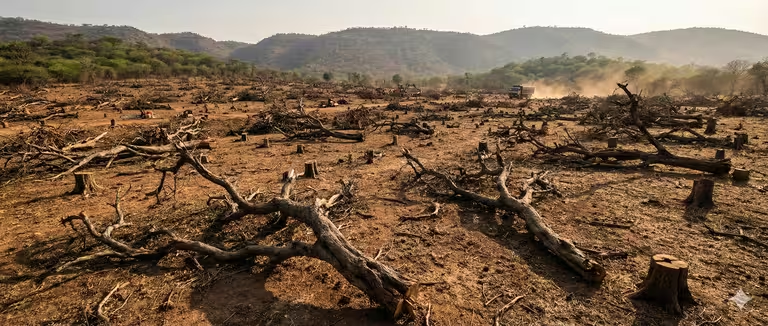
  • Forests are disappearing.
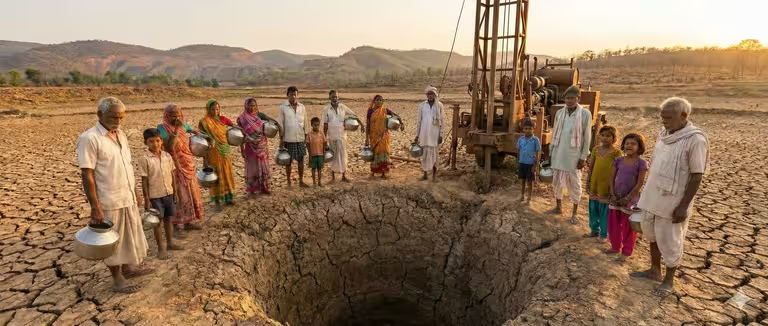
  • Water tables are collapsing.
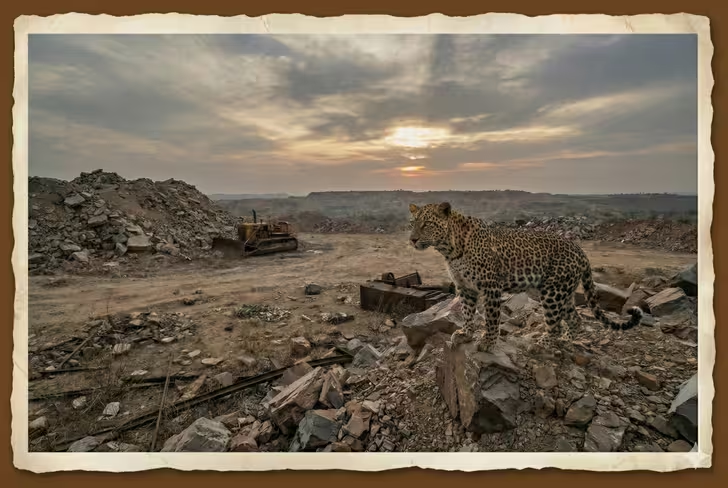
  • Wildlife is losing its home.
  • And with every hill that falls, our future grows weaker.

This is not progress. This is a slow environmental execution.

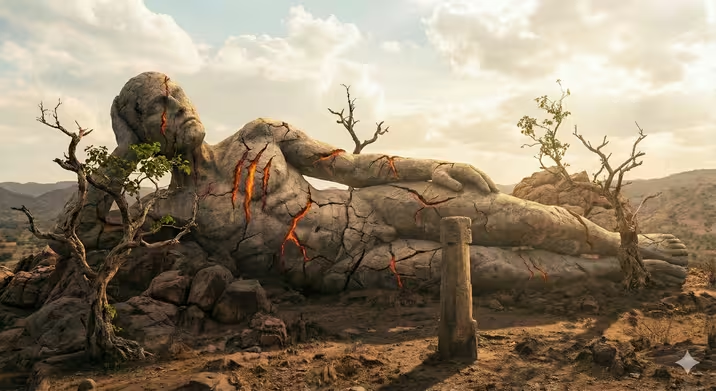
Just like a living heritage being stripped of its sanctity, Aravali is losing its vibrance, its strength, and its purpose - causing irreversible damage to present and future generations.

If Aravali collapses, it won’t cry. But millions will.
Protecting Aravali is not an environmental choice
It is a survival responsibility.
100+ Hills
of the Aravalli range
are gone forever due to mining
~97% Lose
of wildlife once supported
by the Aravalli has been vanished
2700%
Water levels have dropped
Groundwater is now 28 times deeper than before.
East India Company’s
Policy of exploiting our land
still continues 75 years after independence
Why we should free Aravali hills
The Invisible Shield: Our Only Defense Against the Desert "Jab Ret Ka Toofan Aayega, Tab Aravali Yaad Aayegi"
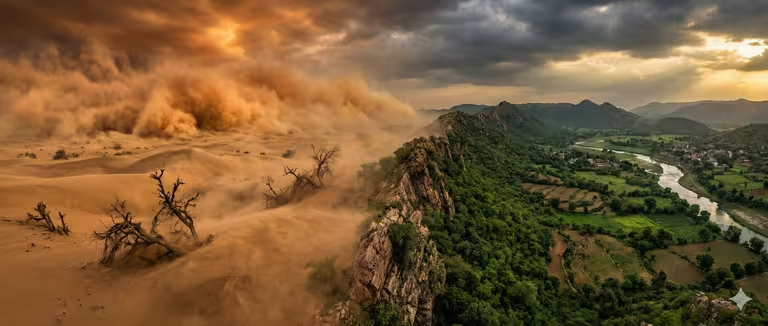
Imagine Delhi and Gurgaon buried under sand dunes. It sounds like a movie scene, but it is a terrifying reality knocking on our door. For millions of years, the Aravali range has stood like a silent soldier, holding back the relentless march of the Thar Desert.
Continue
The Water Bank: Drinking Water for Millions "Pyaasa Shehar, Sookha Kuan, Aur Ek Toota Pahaad"
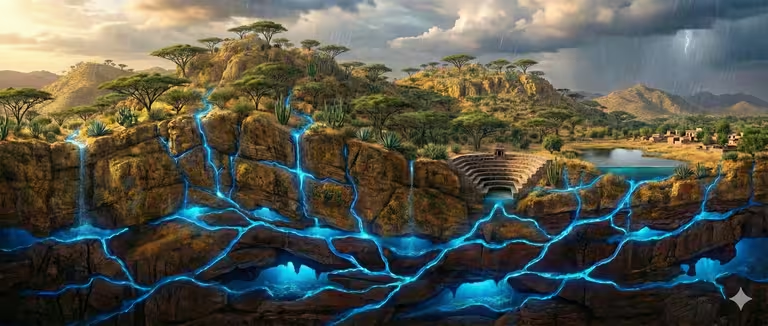
We buy RO filters, but we forget where the water comes from. It doesn't come from pipes; it comes from the ground. And the ground gets it from the Aravalis. The unique fractured rock structure of these hills acts like a giant sponge, soaking up rainwater and sending it deep underground to recharge our aquifers.
Continue
The Lungs of the North: A Breath of Life "Saans Lene Ki Keemat Kya Hai?"
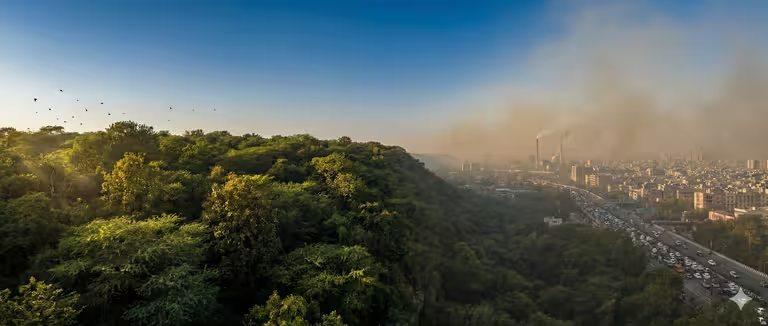
Delhi-NCR is often called a "gas chamber." Our children breathe air equivalent to smoking 10-15 cigarettes a day. In this toxic haze, the Aravalis are the only functional lungs we have left. These forests pump oxygen into the atmosphere and trap millions of tons of dust and carbon.
Continue
Heartbreaking Stories of Aravali Hills
These are not just stories. These are real lives destroyed. Real families shattered. Real ecosystems murdered. The Aravali are over 2 billion years old. They survived empires, wars, and climate change. But they cannot survive human greed.
The British colonizers called the Aravali "wasteland" to justify exploitation.
We must call them what they truly are: Sacred. Ancient. Alive. Worth saving.
/15
Load More
Media on #FreeAravali
/13
Load More
Prominent Voices
An Appeal to Rajasthan, Haryana, Delhi, Gujarat Political Leaders
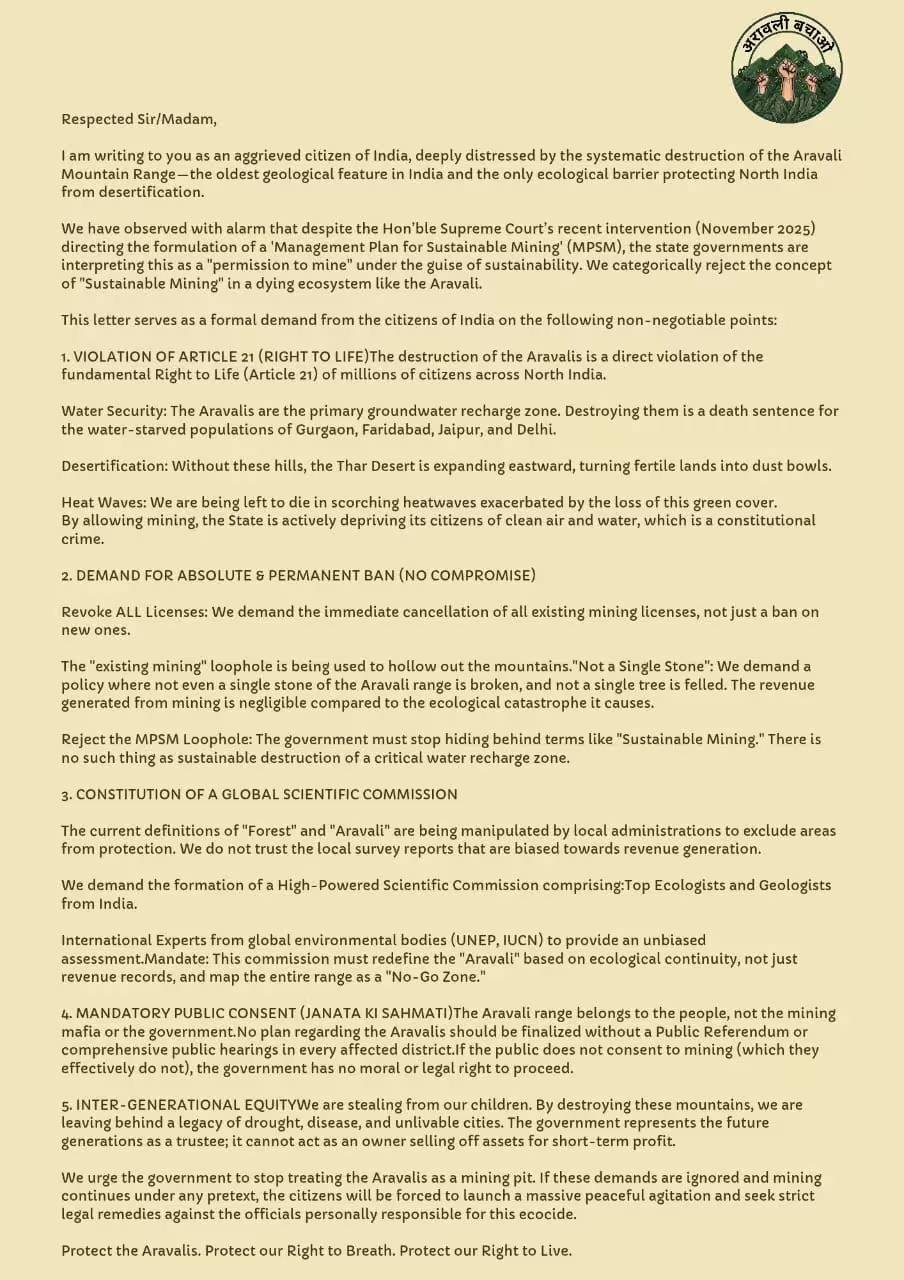
An Appeal Letter in English
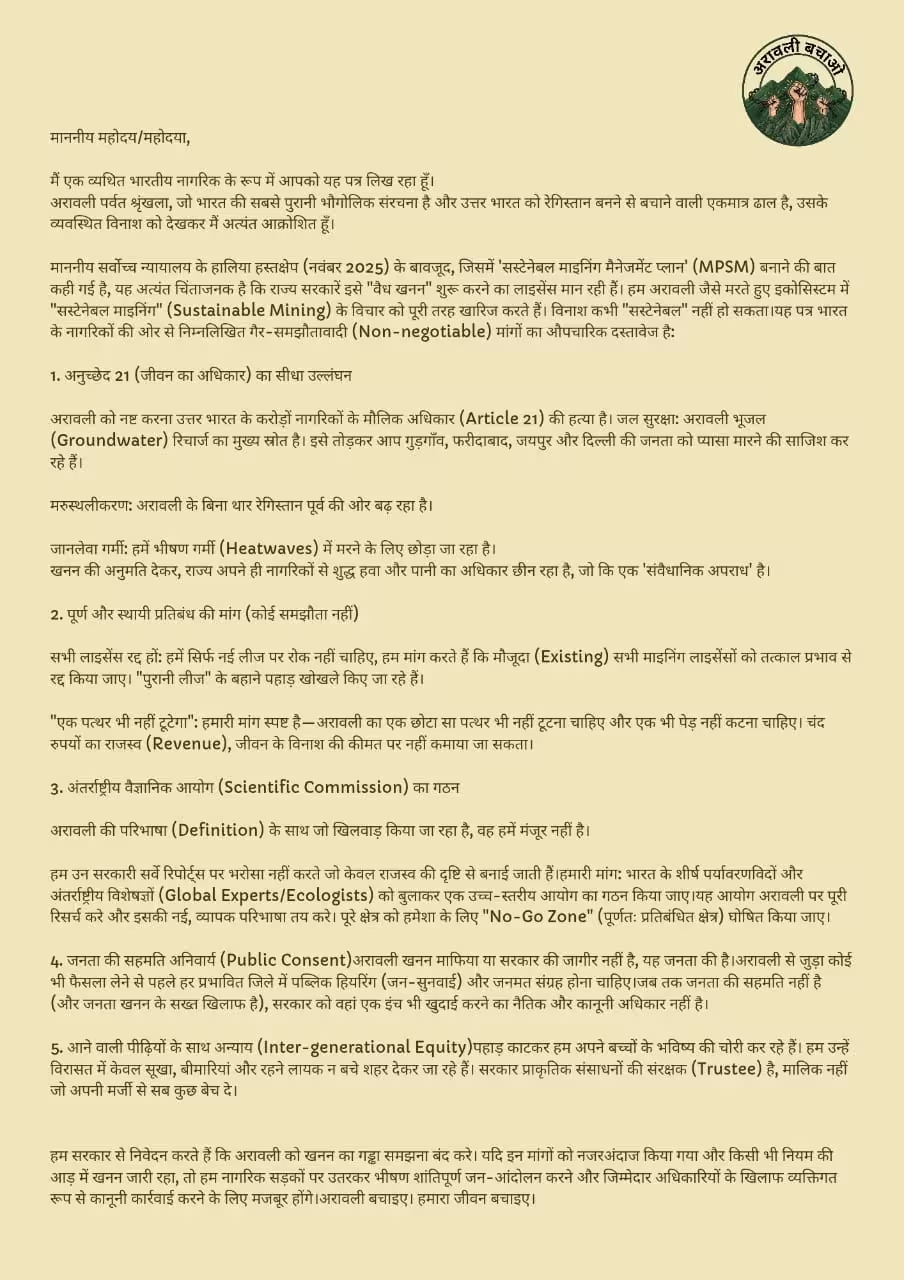
An Appeal Letter in Hindi
Tell your family & friends to show their support with a missed call
Aravali Hills: Colonial Origins & History
1817

The British East India Company introduces the Madras Regulation VII to bring forests under company control. The Aravallis-home to tribal communities for millennia-are declared "company property." This marks the beginning of systematic exploitation. The British see not a sacred ecosystem but "wasteland" with valuable minerals and timber to extract.

1863

The British Parliament passes the Wasteland Claim Act of 1863. Large parts of the Aravallis are declared "wasteland"-a deliberate falsehood. For thousands of years, tribal communities (Meenas, Gurjars, Bhils) had lived sustainably here. The "wasteland" label is just a colonial excuse to steal the land. This lie justifies 150 years of destruction.

1865

The Indian Forest Act of 1865 is introduced-a draconian law giving absolute monopoly to the British government over forest resources. Local communities lose all traditional rights. Tribal people are criminalized for grazing cattle, collecting firewood, or hunting for food.

1894

The Forest Policy Statement of 1894 makes it official: Imperial economic interests supersede all public and ecological concerns. Commercial exploitation is prioritized. The policy opens gates for large-scale logging, mining, and resource extraction. Local needs are completely ignored.

1947

India gains independence, but colonial exploitation continues. The new Indian state inherits and continues the same extractive colonial policies. Mining, quarrying, and construction accelerate in the Aravallis. Post-colonial governments view the hills as resources to be exploited for revenue and development.

1950

For 20+ years after independence, there is little legal protection for the Aravallis. Mining companies operate freely for granite, marble, and limestone. Illegal quarrying flourishes. Forest cover begins visible decline. Nobody tracks the damage. Nobody speaks up. The Aravallis suffer silently.

1980

The Forest Conservation Act of 1980 requires central government approval for forest land conversion. Though weak and often violated, it becomes the first legal tool to potentially protect the Aravallis. But enforcement is non-existent. Mining and destruction continue unabated.

1985

Environmental lawyer M.C. Mehta files a historic Supreme Court petition against 65 stone crushing companies operating illegally near Delhi on the Aravalli foothills. This marks the first major legal intervention to protect the Aravallis. The court is forced to listen.

1988

Rajinder Singh from Tarun Bharat Sangh in Alwar launches a grassroots "Save the Aravallis from Mining" movement. He mobilizes villagers, documents illegal mining, and files legal petitions. This brings public attention to Aravalli destruction for the first time. For the first time, people say: "These hills are not for sale."

1992

The Ministry of Environment, Forest & Climate Change issues an unprecedented notification prohibiting: setting up new industries, mining operations, deforestation, construction activities, and road building-all without prior ministry permission. This is the strongest protection yet. But implementation remains weak.

1993

The Supreme Court imposes a historic ban on illegal mining in protected areas of the Aravallis (Sariska Tiger Reserve). This is the first major judicial victory for environmental protection. But activists allege the ban is largely ignored-mining continues secretly.

2003

The central government of India officially prohibits all mining operations in notified Aravalli areas. On paper, this is comprehensive protection. In practice, corruption, bribery, and political connections allow mining to continue behind closed doors.

2004

India's Supreme Court bans all mining in notified areas of the Aravalli Range across Delhi, Haryana, Rajasthan, and Gujarat. This is the strongest judicial protection yet. But by now, 25% of the Aravallis have already been destroyed. The ban comes too late for millions of trees, animals, and communities.

2018

The Supreme Court orders complete demolition of Kant Enclave-luxury homes illegally built on Aravalli forest land for judges, businessmen, and celebrities. For 30 years, these elites lived in stolen forest. This is a rare victory for environmental justice. But the forest stays dead.

2023

The Haryana government amends the Punjab Land Preservation Act, 1900-a 123-year-old law protecting Aravallis. The amendment opens up 25,000 hectares of forest for construction and mining and legalizes illegal construction already done. Politics overrides environmental protection.

2025

In November 2025, the Supreme Court accepts a uniform scientific definition of Aravalli Hills and recognizes them as a "green barrier preventing Thar Desert eastward spread." It bans all new mining leases. But the definition excludes low-lying scrub hills, undoing 30 years of holistic ecosystem protection.

Now, after the Supreme Court’s decision permitting mining, this destruction is set to accelerate - risking the complete loss of the Aravallis within just a few years. The time to act is now.
Our glorious Aravali hills & lifeline
Aravali is not just a mountain range. It is a life-support system that connects our past, present, and future through water, climate, and ecological balance.

Sign the Petition

Tell the government: We want the Aravalli hills, not a kind of development that sacrifices our environment and the future of generations to come.

*Your data is securely saved and will only be shared with relevant government authorities.

Live Petition Update's

Total Petition Target : 50,00,000

Total Sign Petition's : 0

Live Responses:

    What Nature Protector's Say
    What Media Says
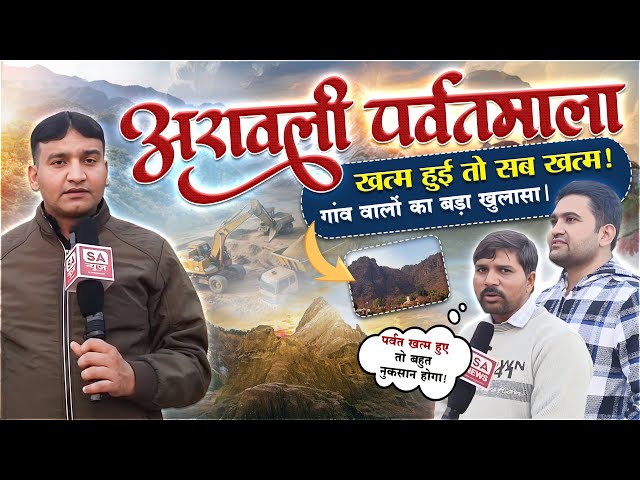
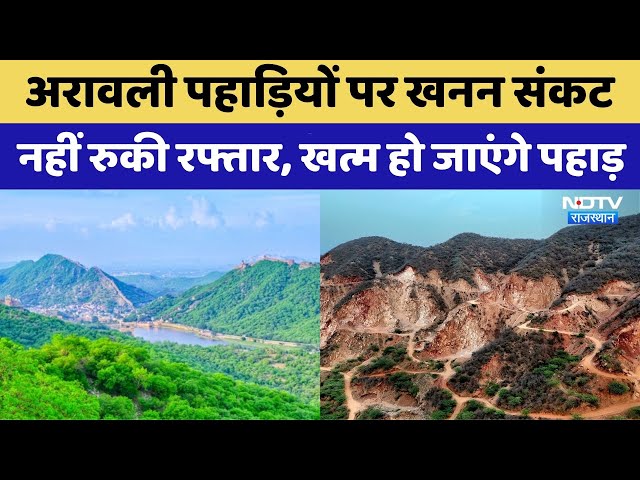
    New Rules Threaten Aravalli Range: 90% Hills May Lose Protection
    NDTV investigated the extent of mining in the Aravalli hills and found alarming evidence of ongoing environmental damage.
    Continue
    How is the Aravalli range to be protected? | Explained
    How do the Aravalli hills and ranges prevent the desertification of the Indo-Gangetic plain? What were the recommendations of the Central Empowered Committee? Why was it necessary to arrive at a uniform definition of the Aravalli hills? Has the Supreme Court completely banned mining in the ranges?
    Continue
    Illegal forest route to Aravali land with PLPA cover blocked in Faridabad
    Gurgaon: An access route cutting through a forest patch was dug up to stop vehicles from moving through protected Aravali land.
    Continue
    Uniform definition of Aravali accepted by Supreme Court will be catastrophic for India’s oldest mountain range
    Decision risks irreversible damage to North West India’s only barrier against desertification, critical water recharge zones, pollution sinks, wildlife habitats, and public health
    Continue
    Experts warn Aravali's 100-metre rule risks dismantling its landscape, biodiversity and groundwater systems
    A new government definition classifying hills over 100 meters as "Aravalis" has sparked expert warnings that significant portions of the vital mountain range may lose protection. This decision risks exposing regions like Delhi-NCR to increased dust storms, drought, and severe air pollution, potentially leading to the "slow deletion" of this natural shield.
    Continue
    The Aravalli Hills Have A New Definition. Here’s Why This Is A Problem.
    As per the new definition of the Aravalli hills that the Supreme Court accepted on November 20, at least 90% of the Aravali will no longer be protected.
    Continue
    Experts warn large parts of Aravali may lose protection after new Supreme Court definition
    With the Supreme Court recently accepting a new government definition that only hills taller than 100 meters will count, experts have warned that many parts of the ecologically vital Aravalis may no longer be protected
    Continue
    Press Kit & Downloads
    Download Press assets here Awareness Kit Download Placards